
B2B paid social advertising: a practical guide for companies that aren’t selling to consumers
At Gwenchana Digital, we work with B2B brands across Southeast Asia that have spent months running paid social campaigns without a single qualified lead. Almost always, the problem is not the platform. It’s the setup.
B2B paid social is the practice of turning social media into a B2B lead generation channel, with targeting built around professional buyers rather than general consumers. The platforms are the same as B2C. The targeting logic, creative approach, and success metrics are entirely different.
- B2B paid social works differently from B2C: longer sales cycles mean you’re building pipeline, not chasing immediate purchases
- Meta and LinkedIn each have distinct strengths; the right choice depends on your ICP’s job title and online behavior
- Most B2B paid social campaigns fail because they optimize for clicks instead of qualified leads
- An agency specializing in B2B paid social handles targeting, creative, and attribution in a way most in-house teams aren’t built for
What “paid social” actually means for B2B companies
B2B paid social is paid advertising placed on social media platforms (Meta, LinkedIn, Reddit), configured to reach professional buyers rather than general consumers.
That definition matters because most B2B marketers hear “paid social” and immediately think LinkedIn. LinkedIn is the safe choice. It’s also, in many cases, the expensive one. The question worth asking first is: where does your specific ICP spend time online, and what are they doing when they get there? See how to choose between Meta Ads and LinkedIn Ads for a practical platform comparison before committing budget.
B2B social media ads work because of targeting logic, not platform reputation. The same CFO evaluating accounting software is on Facebook at 9pm. The VP of Engineering comparing DevOps tools watches YouTube on the weekend. A Facebook campaign filtered by job title, company size, and industry is as much a B2B play as a LinkedIn Sponsored Content post.
The platforms in this guide each serve a distinct role in a B2B campaign. The mistake most teams make isn’t choosing the wrong channel. It’s using one platform for everything and concluding that paid social doesn’t work for B2B.
Why B2B paid social campaigns fail
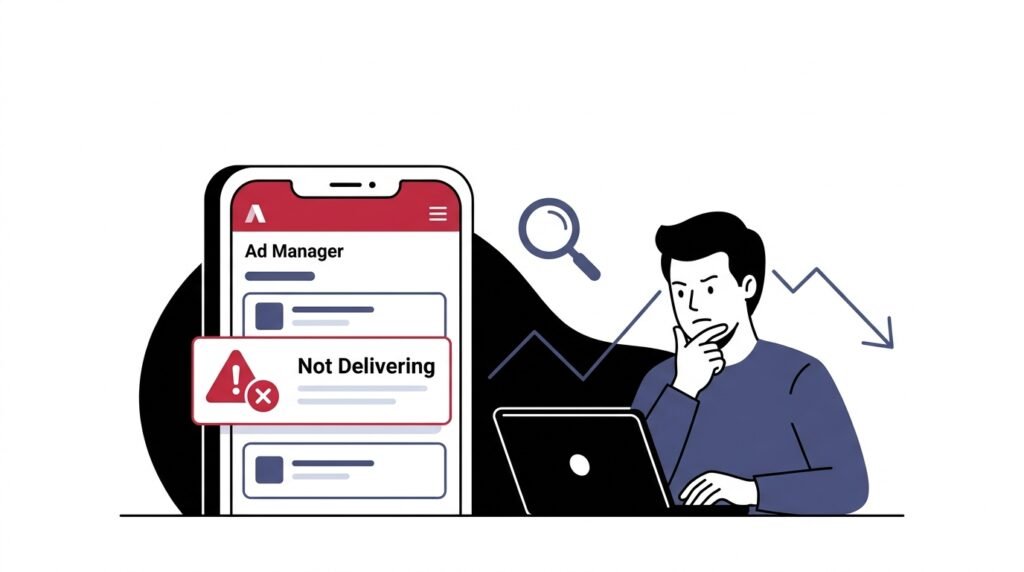
Most B2B paid social campaigns fail in the first 60 days. Not because the channel is wrong, but because the setup doesn’t match how B2B buying actually works.
A B2B tech client came to us spending $5,000 per month on LinkedIn Sponsored Content for three months. Target: “Marketing professionals, ages 25–45, interested in business software.” No company size filter. No seniority layer. Creative was a product feature graphic with a “Learn More” button. After 90 days: 847 clicks, four form fills, zero qualified leads. Budget pulled. Verdict: LinkedIn doesn’t work for us.
The real problems had nothing to do with LinkedIn. The audience was too broad, pulling in everyone from interns to C-suite. The creative passed internal brand review but gave a scrolling buyer no reason to stop. And when no leads appeared, the team blamed the platform rather than the targeting configuration.
According to Dreamdata’s 2025 research, the average B2B buying journey spans 211 days and requires 76 touchpoints across channels before a deal closes. Three months is not enough time to evaluate whether paid social is contributing to pipeline. No single ad closes a B2B deal. The campaign’s job is to build enough familiarity that your brand is the one they call when they’re finally ready to buy.
Three failure patterns show up repeatedly:
- Audience targeting built for reach, not qualification: job function selected without seniority level or company size filters
- Creative designed for brand approval, not buyer attention: corporate imagery, generic headlines, no specific problem addressed
- Last-click attribution: if the platform isn’t the final touchpoint before a form fill, it looks like it isn’t contributing
Fix the setup first. The channel is rarely the problem.
The channels worth your budget in 2026
The right platform follows your ICP’s role, their daily online habits, and what your budget can realistically test.
LinkedIn is the right starting point when your ICP holds a senior decision-making role (VP, Director, C-suite), your deal size sits above $10,000, and you’re selling to mid-market or enterprise accounts. The targeting is what justifies the cost: job title, seniority, company size, industry, and for Account-Based Marketing (ABM) campaigns, named company lists. For a full breakdown of how the platform works in practice, see LinkedIn Ads for B2B.
LinkedIn Lead Gen Forms convert at an average of 13%, compared to 4% for standard landing pages, according to LinkedIn’s 2024 B2B Marketing Benchmark Report. The gap comes from pre-populated profile data: less friction at the form, more completions.
Global CPC benchmarks run $5–$9 depending on audience seniority and industry. In Southeast Asian markets, including Indonesia, LinkedIn CPC for senior decision-maker targeting typically runs $3–$6 — notably lower than US and European figures, which makes the platform more accessible for regional B2B campaigns than most international guides suggest. Factor this in when planning budgets from benchmarks sourced from US agency data.
That’s still three to five times Meta’s average CPC in the region. LinkedIn spend makes sense when your deal size absorbs a higher cost per qualified lead (CPL). If your product sells for $500, the economics rarely hold. If it sells for $50,000, they do.
Formats that work: Sponsored Content, Lead Gen Forms attached to content offers, Document Ads (which drive 2x higher form completion than standard feed formats), and Conversation Ads for personalized outreach sequences.
Meta (Facebook + Instagram)
Business decision-makers spend 74% more time on Facebook per day than the average user, according to Meta Business research from 2024. Buying decisions don’t pause when people leave the office.
B2B Facebook ads and B2B Instagram ads earn their place in a paid social strategy through two specific roles: retargeting warm audiences and running top-of-funnel awareness at a cost LinkedIn cannot match. In Southeast Asia, Meta’s role in B2B is often stronger than global averages — professional daily active usage is high across the region, and decision-makers are reachable on Meta at a meaningful scale even during business hours. When someone has already visited your website, watched a video, or appears on your CRM list, Meta retargeting keeps your brand visible at well below a dollar per click. For a closer look at how the numbers compare across channels, see comparing ROI across paid channels.
Running LinkedIn-heavy awareness alongside a Meta retargeting sequence is one of the most cost-efficient ways to move B2B deals that are already in motion. Creative on Meta performs differently from LinkedIn: shorter copy, less formal, stronger on social proof from recognizable company names rather than product specifications.
Reddit is a test-budget play for specific verticals, not a primary channel. It works when you’re selling to software developers, cybersecurity teams, or SaaS evaluators who research purchasing decisions in subreddits before ever talking to sales. CPCs run $0.75–$2.00, and community-native creative consistently outperforms standard ad formats. If your buyers gather in specific subreddits, run a small test before writing it off.
Platform comparison
| Channel | Best ICP match | Global avg CPC | SEA avg CPC | Top strength | Risk |
|---|---|---|---|---|---|
| VP / Director / C-suite | $5–$9 | $3–$6 | Professional targeting + ABM | High CPL | |
| Meta | Mid-market / retargeting | $0.30–$1.50 | $0.10–$0.60 | Cost-efficient reach + warm audiences | Lower intent |
| Tech / SaaS evaluators | $0.75–$2.00 | $0.50–$1.50 | Community trust, active research intent | Niche reach |
SEA CPC figures are indicative benchmarks; actual costs vary by industry, targeting specificity, and campaign objective. [Source needed: search “B2B LinkedIn CPC Southeast Asia Indonesia 2026”]
How a B2B paid social campaign is actually structured
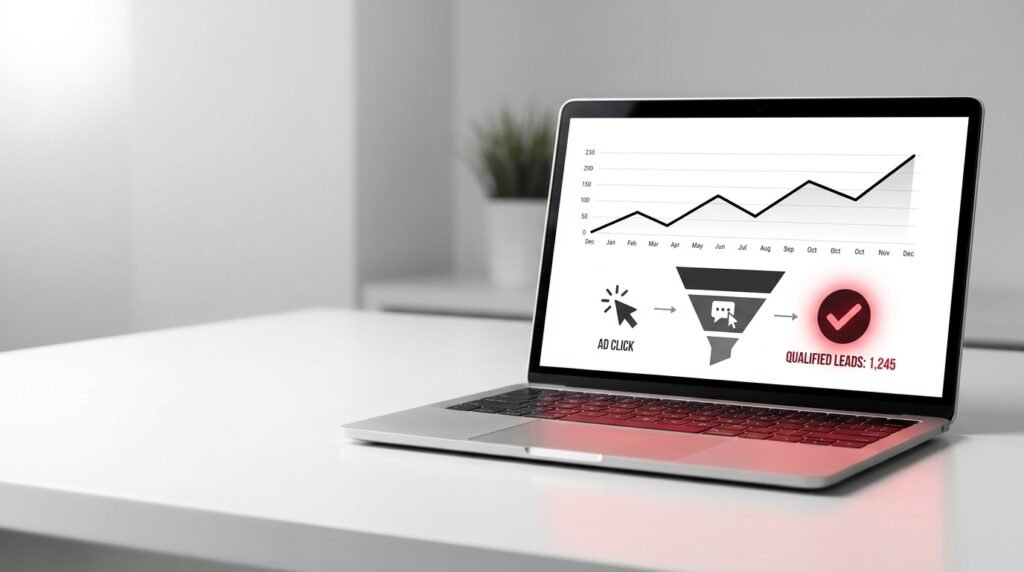
A B2B campaign is a sequence of messages matched to where a buyer sits in their decision process. Running a single ad to a cold audience and waiting for leads is not a campaign structure. It’s a lottery ticket. The B2B ad funnel architecture is what separates brands generating qualified leads from those generating clicks.
Top of funnel (awareness): Visibility with the right people, not leads. Video or thought leadership content runs to a cold but tightly filtered audience. CTR is the wrong metric here. A 0.3% CTR from 200 correct decision-makers beats a 3% CTR from 2,000 wrong ones. Track reach, impressions among target accounts, and video completion rate.
Mid-funnel (consideration): This layer works with people who have already engaged: video viewers, website visitors, email list matches. LinkedIn Lead Gen Forms, webinar invitations, and case study carousels belong here. The b2b paid social strategy question shifts from “who sees this” to “what does it cost to generate a qualified conversation.” Track CPL and form completion rate. Most B2B campaigns should put the largest share of budget here.
Bottom of funnel (conversion): Retargeting sequences with a direct offer: demo booking, consultation request, free assessment. The audience is small and warm. See B2B retargeting strategy for how to build sequences that keep the conversation moving without wearing buyers out.
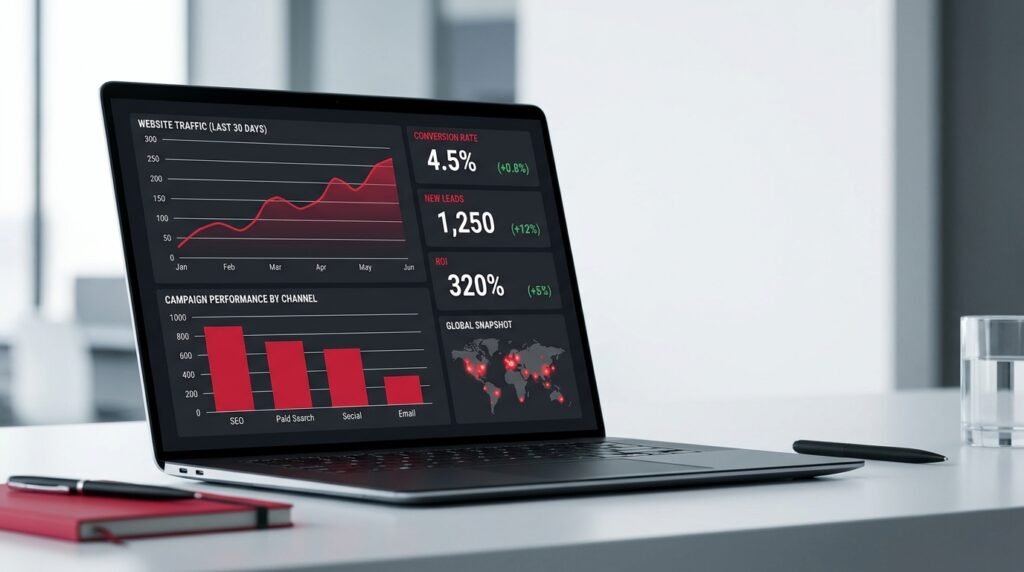
Attribution across all three stages requires CRM integration, not just platform dashboards. Meta’s Conversions API and LinkedIn’s Insight Tag feed data back into the platforms, but the complete picture only emerges when you connect those signals to actual CRM deal records. Last-click attribution makes LinkedIn look like wasted spend in most B2B campaigns. Multi-touch attribution shows what it actually contributed. For the full tracking setup, see tracking B2B ad ROI when sales happen offline.
What to expect from a B2B paid social agency
At Gwenchana Digital, we’ve found the gap rarely comes from willingness. In-house teams are often skilled and well-resourced. But there are three operational demands that most in-house setups can’t sustain, not because of capability, but because of how agency work is structured differently.
An agency running campaigns across multiple clients builds things over time that a single in-house team cannot: cross-client CPL benchmarks by industry and deal size, pre-built audience segment templates, exclusion lists that prevent budget waste, and creative testing cycles running four to six ad variants simultaneously rather than once per quarter.
The specific gaps that tend to hit in-house teams hardest:
- Creative iteration speed: most in-house teams ship one or two ad variants per campaign and run them for months. Higher testing frequency produces faster signal and faster budget reallocation away from what isn’t working.
- Attribution setup: connecting Meta Conversions API, LinkedIn Insight Tag, and CRM pipeline data into a working system is a meaningful technical project. Most in-house campaigns skip it, which is why paid social stays hard to justify in budget reviews.
- Audience architecture: ABM account lists, layered exclusions, and lookalike audiences built from high-value converters get sharper over time. They compound with more campaign data behind them.
This is the practical application of what we call Clarity Before Virality at Gwenchana Digital: reaching the right buyer with the right message matters more than reaching the most buyers. A campaign that produces 10 conversations with qualified decision-makers outperforms one that generates 10,000 impressions from the wrong audience.
A good agency will not promise pipeline within 30 days, hide CPL from your reporting, or frame reach and impressions as success metrics. When reviewing proposals, ask: “How do you connect ad spend to pipeline in your reporting?” If the answer centers on CTR, keep looking. See also in-house team vs. B2B paid social agency for a longer breakdown of when each model makes sense.
Frequently asked questions
Is paid social worth it for B2B companies? Yes, with the right configuration. B2B paid social generates qualified pipeline when audience targeting filters by job title, seniority, and company size, and when attribution connects ad spend to CRM data rather than clicks alone. Companies with those two elements in place consistently find paid social contributes to pipeline. Companies optimizing for clicks with last-touch attribution usually conclude it doesn’t work.
Is Facebook or LinkedIn better for B2B advertising? It depends on your ICP and budget. LinkedIn works when you’re targeting senior decision-makers at mid-market or enterprise accounts and your deal size supports higher CPCs — $5–$9 globally, $3–$6 in Southeast Asian markets. Meta works for retargeting warm audiences at lower cost and for reaching buyers outside working hours. Most effective B2B paid social strategies run both: LinkedIn for cold audience targeting, Meta for retargeting sequences.
How much should a B2B company spend on paid social? $1,000–$2,500 per month gives you enough data to begin optimization, but $3,000–$5,000 is more practical if you’re running both LinkedIn and Meta. LinkedIn’s CPCs leave little headroom below $1,500 per month for meaningful impressions. Starting too small produces inconclusive data rather than real signal on what’s working.
How long before B2B paid social ads show results? Expect 60–90 days before the data becomes useful. According to Dreamdata’s 2025 research, the average B2B deal takes 211 days from first touch to close. In the first 90 days, the useful signal is whether qualified leads are entering your pipeline and whether CPL is trending in a direction that holds against your deal economics.
How do you measure ROI on B2B paid social campaigns? Connect your ad platforms to your CRM. Native platform metrics (clicks, impressions, CTR) don’t show whether paid social produces qualified pipeline. When LinkedIn Insight Tag and Meta Conversions API feed into HubSpot, Salesforce, or your CRM of choice, you can track which campaigns influenced deals that actually closed. That’s the number that justifies or cuts paid social spend in the next budget cycle.
What does working with a B2B paid social agency in Southeast Asia look like? At Gwenchana Digital, we work with B2B companies across Indonesia and Southeast Asia on paid social campaigns built around Clarity Before Virality: every targeting decision, creative choice, and attribution setup is designed to identify and convert the right buyers, not chase surface metrics. Our paid social work covers LinkedIn, Meta, and attribution setup that connects ad spend to CRM pipeline data. If you want to know whether the approach fits your ICP and market, book a free consultation and we’ll tell you straight.
B2B paid social works when three things are in place: targeting that reaches the right buyer rather than the broadest audience; creative that addresses a real problem the buyer recognizes; and attribution that connects spend to pipeline, not just clicks. When any one of those is missing, the campaign looks like it’s failing even when the channel is doing its job.
Not sure whether paid social fits your ICP, or which channel makes sense for your current budget? Book a free consultation and we’ll give you a direct answer, even if that answer is: start with something else entirely.
Written by the paid social team at Gwenchana Digital — a digital advertising agency in Jakarta specializing in B2B campaigns for Southeast Asian markets.