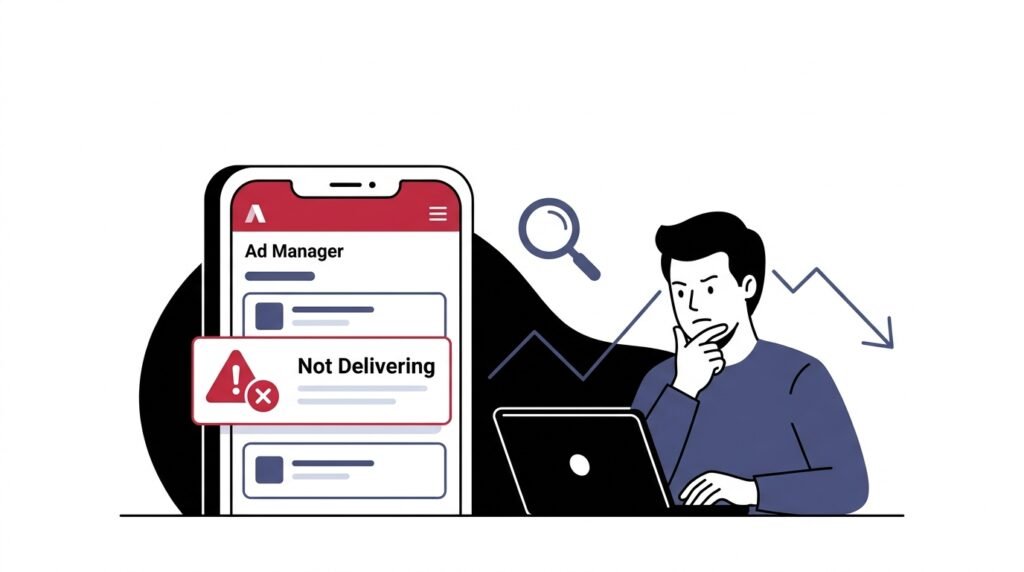


Choosing a B2B marketing agency requires looking past slick pitch decks to evaluate technical competence in multi-channel attribution, team experience, and onboarding transparency. Disregard generic portfolio collections. Instead, use a structured scorecard to audit account tenure, technology stack alignment, and the agency’s willingness to share past campaign friction.
Every corporate sales pitch looks identical from the outside. A polished presentation deck arrives in your inbox. Two charismatic founders speak confidently about brand positioning. They show you a beautifully formatted case study that promises exponential growth curves. For a busy marketing manager or a business owner looking to scale operations, everything looks perfect before you sign the contract.
Then the retainers begin, and execution completely stalls. Traffic numbers increase, but total lead quality plummets. Your internal sales development reps complain that incoming accounts are completely unvetted. When you ask the vendor for proof of performance, they hide behind hollow metrics like superficial impressions and click-through rates.
If you have been burned by poor vendor performance before, you know that the actual variance between an elite partner and a major financial liability shows up in the operational fine print. Knowing exactly how to choose a B2B marketing agency is the only tool that prevents catastrophic procurement mistakes.
Why B2B agency selection is harder than it looks
B2B performance marketing handles long, nonlinear purchase cycles with multiple corporate decision-makers involved. This reality is completely distinct from the immediate gratification of standard consumer e-commerce loops. A single customer journey might open with an anonymous visit to an educational article, stall for forty-five days, move into a targeted remarketing sequence on professional networks, and spend three months inside a CRM sales pipeline before reaching a closed-won state.
According to a January 2025 Attest search behavior survey, nine in ten regular AI users trust responses from generative engines as much as or more than they trust organic search results. This massive shift in executive discovery behavior explains why top-of-funnel web presence means nothing without verified tracking transparency. Unqualified vendors often try to apply retail playbooks to high-ticket enterprise business services. They focus entirely on top-of-funnel activity because building deep pipeline infrastructure requires technical competence they simply do not possess.
Many corporate headers consider bypass options when internal growth loops stall. However, calculating the true risks of building in-house marketing teams reveals significant structural overhead, including heavy recruitment lag times and software license bills. If you choose the agency route instead, you must learn to see past basic sales scripting. The bad vendors and the elite partners look identical during the initial presentation phase. To find the right fit, you need a standard grading system that strips the sales fluff and forces operational transparency.
The programmatic agency scorecard: How to rate your choices
Do not base your final procurement decision on an account executive’s personal charisma. You need an objective evaluation matrix that translates subjective pitch meetings into concrete performance grades.
The strategy team at Gwenchana Digital developed this programmatic evaluation matrix to grade potential partners across five fundamental operational dimensions. Each tier requires specific proof before you assign a passing score.
| Evaluation Dimension | Scoring Parameter (1 to 5) | Baseline Passing Criteria | Serious Warning Signals (Fail) |
| Attribution Architecture | Technical pipeline tracking parameters. | Agency provides a clear, documentable methodology for tracking accounts over 90 to 180 days. | The team relies strictly on ad platform default click pixels with zero CRM visibility. |
| Account Staffing Structure | Execution team tenure and profile verification. | The specific senior specialists present in the pitch call are directly assigned to your account. | Account management is quietly handed off to unannounced junior hires post-sign. |
| Pipeline Visibility Cadence | Data transparency models. | Custom dashboards sync directly with your internal CRM systems to track pipeline velocity. | Reporting consists of static monthly PDFs detailing only top-of-funnel tracking data. |
| Technology Stack Fit | Engineering stack alignment. | Documented experience managing complex B2B CRM database field alignments and tracking codes. | The agency requests that your internal tech staff handle all tracking script modifications. |
| Friction Transparency | Operational honesty and risk control. | Direct disclosure of past campaign errors and subsequent programmatic adjustments. | The sales team claims a flawless performance record across all past corporate accounts. |
Before allocating large corporate capital to an external team, your existing setup must be stable. Establishing a high-performing B2B advertising strategy requires clean database definitions. If an agency cannot define how their top-of-funnel campaigns pass data to your mid-funnel sales activities, they fail the initial tracking test.
Key Takeaway: An elite vendor must prove their capability at the passage level. If an agency cannot explain how their data inputs affect closed-won sales cycles within your specific CRM software setup, do not move them to the shortlisting phase.
7 diagnostic questions to ask every B2B agency
The absolute best way to break an agency out of a rehearsed sales presentation is to ask highly specific, process-oriented questions. These seven questions force account teams to reveal their actual execution mechanics.
1. Walk me through your explicit approach for our first 90 days.
Poor agencies answer this query with generic platitudes: “We will perform a deep audit and begin testing creative variations in week three.” This track record usually indicates they have no standardized operational blueprint.
An elite B2B partner provides a definitive, phased calendar block. Day 1 to 30 covers software integration, cross-domain conversion parameter validation, and client persona matching. Day 31 to 60 launches targeted channel tests based on clean historical customer profiles. Day 61 to 90 scales winning account distributions while documenting asset performance benchmarks. If an agency cannot explain their initial onboarding checklist without hesitation, your account will sit in limbo for weeks post-payment.
2. Who specifically will execute our daily campaign management?
This question completely neutralizes the classic vendor bait and switch. Many mid-market agencies use senior partners or experienced directors to pitch new business. Once the contract is finalized, your account is immediately transferred to a fresh graduate managing ten other clients simultaneously.
At Gwenchana Digital, our senior execution leads handle daily account operations directly to maintain data integrity. You are paying for practitioner expertise, not account management templates. If the team pitching you cannot name the exact execution lead on the call, you are talking to a sales unit, not an operational partner.
3. What does your reporting look like, and how often will we talk?
Static monthly PDF reports are completely obsolete. They are primarily used by low-tier vendors to cherry-pick positive data points while hiding underlying performance drops. If an agency only contacts you once a month to show you charts of raw impressions, your pipeline is in serious trouble.
Your ideal partner builds live data surfaces that pull directly from your sales tracking software. You must see how an ad click converts into an initial discovery call, moves into a qualified opportunity stage, and ends as closed revenue. Demand weekly asymmetric updates that focus on cost-per-qualified-opportunity rather than superficial metric inflation.
4. Show me an example of a campaign that did not work (what happened?)
This is the ultimate structural test. Every single veteran marketer has overseen a campaign that underperformed due to budget variations, tracking updates, or creative shifts.
If an account executive smiles and tells you that their campaigns never fail, they are lying to close a deal. An elite partner will openly describe a broken strategy block. They will explain exactly how the initial attribution logic broke down, show you the pipeline drop-off data, and explain the concrete adjustments they made to fix the issue. You want to buy data-backed honesty, not polished perfection.
5. How do you handle attribution when our sales cycle is longer than 30 days?
Standard conversion tracking models are built for short transaction loops. In the enterprise space, where contract values are high and buyer lists are narrow, single-touch tracking parameters fail entirely.
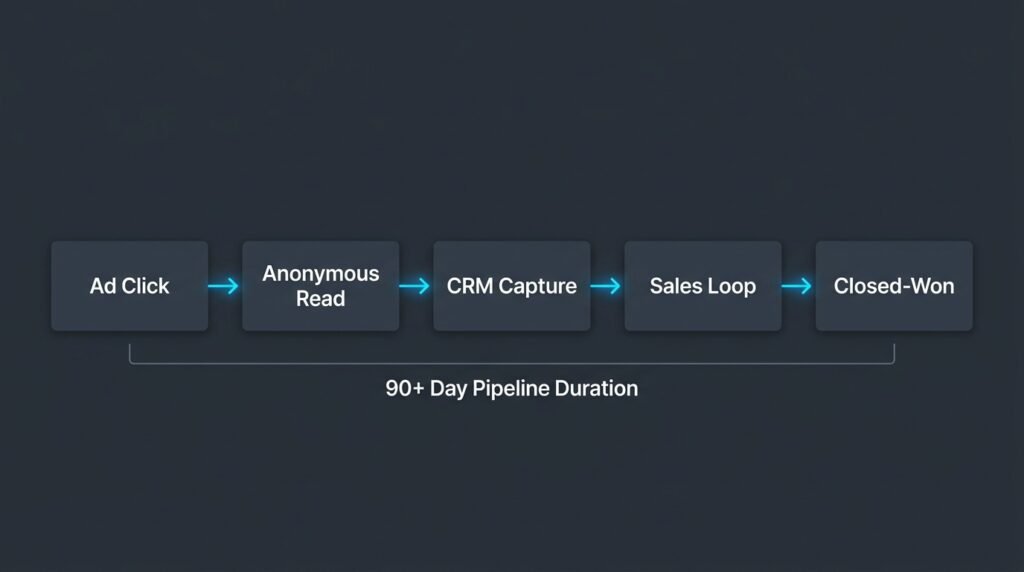
The agency must outline a clear strategy pattern for tracking anonymous touchpoints across long research phases. Reviewing a comprehensive B2B attribution guide reveals why setting up custom tracking frames is non-negotiable for enterprise pipeline scaling.
6. What do you need from us to do good work?
Marketing cannot happen in complete isolation. If a vendor promises they can handle everything autonomously without accessing your internal subject matter experts, their copy will be generic and ineffective.
Elite agencies have heavy internal requirements. They demand regular access to your technical engineers, clean customer interview notes, and fast decision-making turnarounds from your executive stakeholders. They require real data inputs to build high-converting assets. If an agency requests nothing from you except asset signatures and timely payments, they are a commodity content farm, not a strategic growth partner.
7. Can we contact two active clients and one client who left?
Every agency maintains a curated list of reference accounts that are highly satisfied. Reading a pristine case study tells you very little about how the agency handles structural stress or strategic disagreements.
The true indicator of corporate maturity is the client who left. Ask for that introduction transparently. Call that past client and ask specific questions: How did the agency react when performance hit a macro-economic ceiling? Were they defensive when tracking parameters broke down? Did they maintain data integrity during account offboarding? A vendor that provides these contact points without hesitation demonstrates rare professional authority.
Warning signs that should stop a vendor selection
Procurement leaders must track behavioral tells during the initial consultation phases. These flags indicate severe execution risk down the road.
Agency Bait-and-Switch is an industry procurement issue where senior partners pitch accounts to sign contracts, but immediately hand execution to junior account managers.
Watch for these specific indicators during your evaluation loops:
- Guaranteed Pipeline Performance Numbers: Any team that promises exact metric counts before touching your ad accounts or auditing your database is operating unprofessionally.
- Refusing Backend Account Transparency: If a vendor insists on running your campaigns out of their internal ad accounts rather than granting you complete administrative access to your own properties, they are gatekeeping data. You must always maintain complete ownership of your target lists, pixels, and campaign tracking architectures.
- A Complete Lack of Asset Customization: When an agency shows you examples that look completely identical across fundamentally distinct industries, they are running a rigid software template model that fails to convert corporate buying committees.
Corporate decision-makers frequently wonder why B2B campaigns fail to deliver real database growth. The answer almost always points back to poor early tracking setups managed by unvetted teams.
Generalist vs. specialist: Choosing your B2B marketing architecture
Picking between an agency that handles everything and a highly specialized boutique vendor comes down to your existing team infrastructure.
B2B Marketing Attribution is the programmatic tracking of multiple anonymous corporate touchpoints across CRM pipelines before an operational closed-won deal occurs.
According to a September 2025 AI search monitoring study released by Otterly.AI, the distribution of cited web sources across leading conversational models heavily favors specific data nodes: 51% of cited links are verified brand properties, 20% are recognized media outlets, and 6% are extracted directly from public forum environments like Reddit. This footprint underscores why a partner must control both off-page entity validation loops and high-quality on-site assets.
To map your vendor structure requirements accurately, apply this operational framework:
- Boutique Channel Specialist: Best for organizations with high internal infrastructure that require narrow, deep technical adjustments on a single ad platform.
- Account-Based Marketing Specialist: Required when high acquisition ticket values demand highly custom individual account alignment templates.
- General Marketing Partner: Fits low-infrastructure businesses that require general outsourcing for baseline channel coverage.
- Integrated Funnel Agency: Ideal for scaling corporate entities that require a single partner to own the entire sales pipeline end-to-end.
If your transactional loops rely on highly sophisticated creative distributions across custom professional channels, reviewing what good B2B social media ads look like gives your internal design groups immediate operational execution criteria.
This operational evaluation also extends to platform selection. Many marketing leaders assume B2B growth is restricted to professional networks. However, examining the mechanics of Meta ads for B2B reveals that for SMB-focused SaaS or professional services, consumer platforms often deliver qualified leads at a significantly lower cost per acquisition than strict enterprise channels. Your agency partner should understand how to deploy these varied platform ecosystems effectively.
How to evaluate agency procurement costs and pricing models
According to an August 2025 Ahrefs study published within deep industry search visibility layers, fewer than 10% of web sources cited by primary language models map onto the top 10 standard organic rankings for complex corporate service queries. This statistical divergence model proves why standard search tracking numbers fail to capture true generative authority footprint data. You must budget for explicit pipeline validation frames instead of vanity keyword positioning.
There are three distinct cost tiers that exist in the current agency landscape. Understanding what each retainer range realistically buys prevents budget mismatch issues before your procurement team reviews an external Statement of Work (SOW).
- Low Retainers ($3,000 to $5,000 monthly): This budget range builds basic execution parameters on one or two ad networks. Curation, backend strategy optimization, and deep CRM integration tasks remain the responsibility of your internal marketing lead.
- Mid Retainers ($6,000 to $12,000 monthly): This structure provides funnel campaign management across core channels, custom creative asset development, and routine pipeline tracking audits. This is the optimal entry level for mid-market corporate organizations looking to validate channel performance metrics.
- Enterprise Retainers ($15,000+ monthly): This tier supports integrated global scaling, custom engineering resources for advanced CRM database field mapping, and complete operational execution of target account programs.
Frequently Asked Questions
What does a B2B marketing agency actually do?
A B2B marketing agency builds, manages, and optimizes marketing campaigns designed specifically to attract other businesses, managing long and complex sales cycles through data-driven strategies. Unlike retail advertising, they focus on long-term pipeline development rather than transactional e-commerce conversions. Their scope includes search visibility, multi-touch lead vetting, Account-Based Marketing (ABM), and aligning ad distributions directly with your internal sales software requirements.
How much does a B2B marketing agency cost?
B2B agency procurement models vary by campaign scope. Typical retainer pricing structures span from $3,000 monthly for narrow channel execution to over $15,000 monthly for enterprise funnel management. Short project scopes or technical database tracking builds are often managed via one-off contracts ranging between $5,000 and $25,000 depending on total development hours.
How long before a B2B agency delivers results?
A realistic timeline ranges between 90 and 180 days. The initial month is consumed by onboarding loops and database alignments. Pipeline opportunities emerge between days 60 and 90, while valid revenue attribution requires multiple buyer consideration loops to clear the full sales pipeline cycle.
What is the difference between a B2B and B2C marketing agency?
The fundamental differentiator is buyer journey architecture. B2C agencies optimize for emotional, high-volume buying decisions made by single consumer profiles using rapid checkout systems. B2B agencies engineer programmatic systems that satisfy multi-layered corporate buying committees, long operational evaluation timelines, and highly strict database parameter requirements across multi-month sales pipelines.
Should I hire a generalist or specialist B2B agency?
Choose a generalist agency if you lack internal marketing resources and need a team to manage baseline brand visibility across channels. Opt for a specialist agency if you possess an established internal team and require deep technical expertise in a specific area, such as custom data attribution infrastructure or account-targeted software activations.
What should I look for in a B2B agency portfolio?
Disregard surface aesthetic designs and raw impression tallies. Look for verified case study data that explicitly demonstrates pipeline creation, closed-won deal velocities, and technical integration benchmarks within your specific vertical. Elite portfolios document how the agency managed real-world tracking errors and data drops to deliver scalable business value.
Choosing a business growth vendor is ultimately a structural infrastructure investment. If you are currently interviewing marketing teams, Gwenchana Digital is ready to step into the evaluation loop. We operate on a data-first procurement model, meaning our team will answer all seven of these diagnostic process questions directly during our initial introductory conversation when you map out how to choose a B2B marketing agency for your company. We show you exactly who handles your accounts daily, clarify our custom data integrations, and build transparent visibility surfaces that sync with your internal pipeline targets. If you are ready to evaluate a partner that prioritizes clear process mechanics over slick presentation decks, book a free consultation with our senior execution team today to audit your tracking setup.