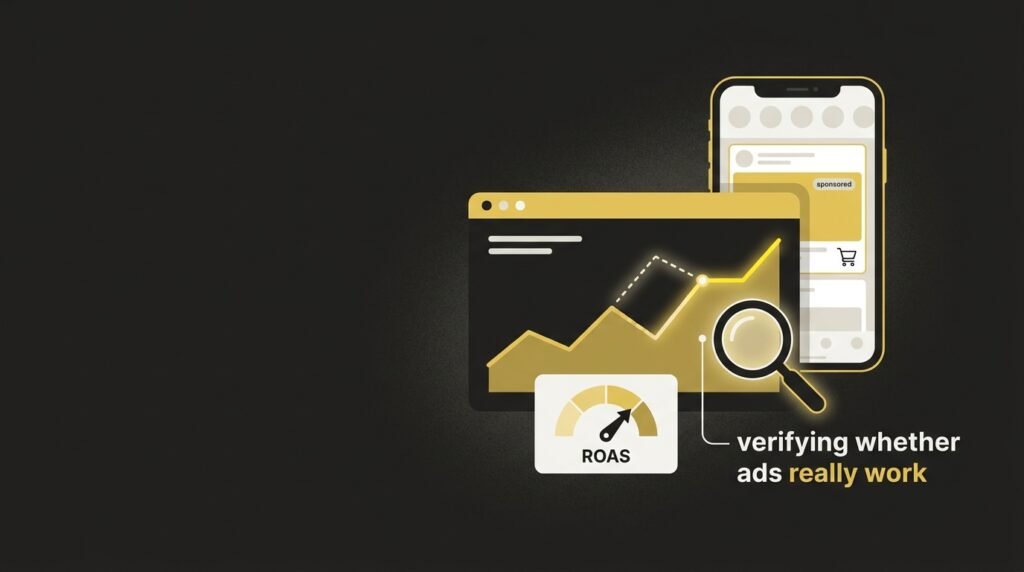
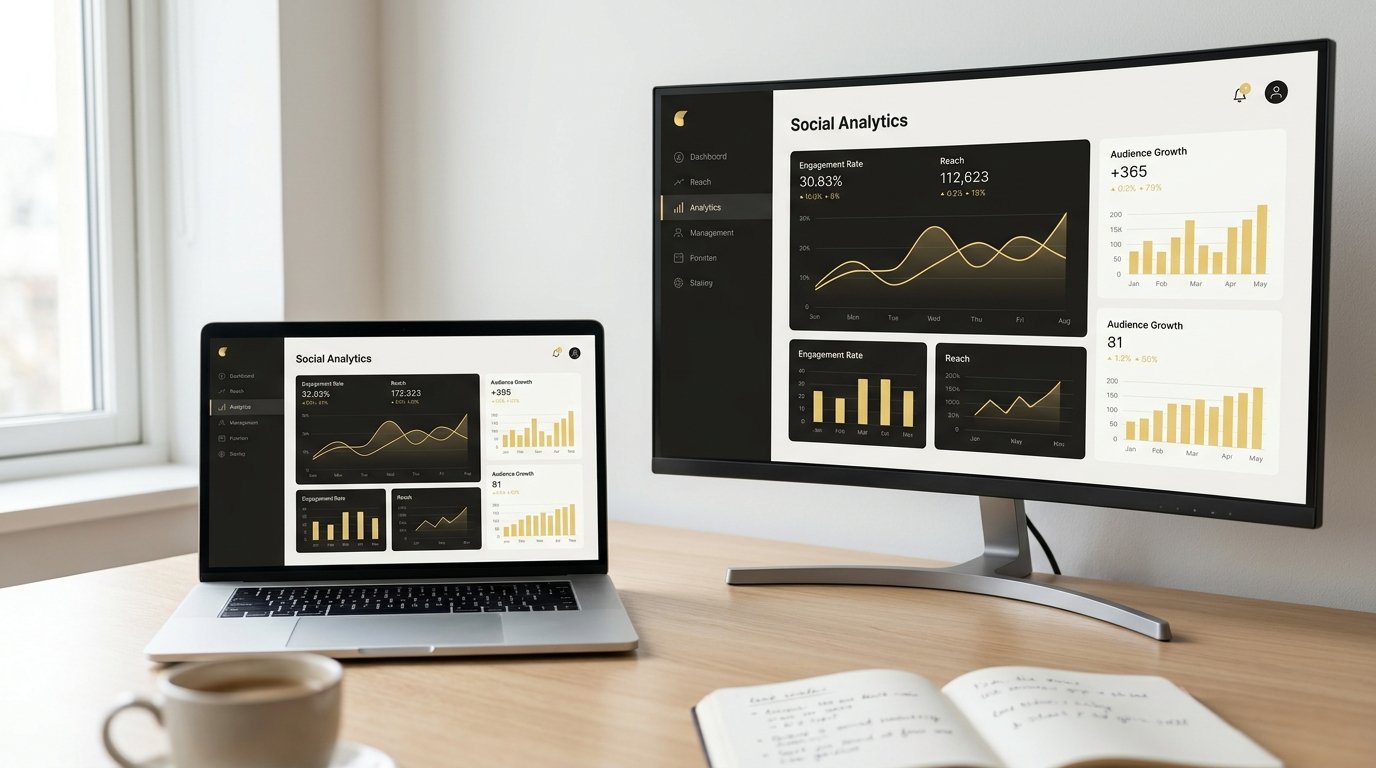

A social media management tool centralizes scheduling, analytics, and reporting for every connected platform (Instagram, TikTok, Facebook, LinkedIn) into one dashboard. In Indonesia, demand for these tools has grown sharply, with pricing ranging from free plans to enterprise tiers built for agencies and in-house teams.
This guide breaks down what a social media management dashboard actually does, which metrics are worth tracking, and how five tools (Buffer, Metricool, Sprout Social, and both Hootsuite plans) compare on price once converted to rupiah. It also covers when AI reporting is worth paying for and how to defend the budget to a CFO who only cares about revenue. Read through to the comparison table and the five-question checklist before picking a tool. Both change the pricing math.
What is a social media management dashboard?
A social media management dashboard is a single interface that pulls performance data from every connected social account into one view. Instead of logging into Instagram, TikTok, and LinkedIn separately to check numbers, a marketer opens one screen and sees follower growth, engagement, and reach side by side.
The dashboard usually lives inside a broader social media management tool, which also handles scheduling, content approval, and client reporting. For a team running five or six platforms at once, that consolidation is the entire point: it turns scattered numbers into one report a manager can read in ten minutes instead of an hour.
Agencies use dashboards to prove results to clients. In-house teams use them to justify budget to leadership. Both need the same thing: one number that tells the truth without fifteen browser tabs open.
What metrics should you actually track?
Not every number on a dashboard deserves a seat there. Follower count, likes, and impressions look good in a screenshot, but they rarely explain whether a campaign moved the business forward. The metrics worth tracking depend on what the dashboard is for: brand awareness, lead generation, or customer service, and on the platform generating the data.
Five metrics carry most of the weight for most teams:
- Engagement rate: likes, comments, and shares divided by reach
- Reach and impressions: how many people actually saw the content
- Click-through rate: how many people acted on it
- Response time: how fast a brand replies to comments and DMs
- Share of voice: how a brand’s mentions compare to competitors’
Metrics that belong on a B2B dashboard (vs. vanity metrics)
Social media follower count means something different depending on who’s buying. In consumer marketing, it signals brand awareness. In B2B lead generation, follower count has almost no relationship to pipeline. A company can have ten thousand LinkedIn followers and zero qualified leads. This breakdown of what belongs on a B2B marketing dashboard argues for weighting metrics closer to revenue instead: content-driven demo requests, LinkedIn InMail response rates, and traffic from social to gated content.
Sentiment and social listening data
Raw engagement numbers don’t say whether people like what they’re seeing. Sentiment analysis fills that gap by scoring comments and mentions as positive, negative, or neutral, which is where media analysis and social listening services become useful: spotting a reputation problem in comments three days before it becomes a headline is worth more than any engagement chart.
How does a social media marketing dashboard work?
Most dashboards run on three layers:
- Integration layer: connects to each platform’s API (Meta, TikTok, LinkedIn) and pulls raw data every few hours
- Processing layer: standardizes that data, so “reach” means the same thing whether it came from Instagram or YouTube
- Visualization layer: turns the numbers into charts, tables, and alerts someone can actually use without a data science background
The API layer is where most tools differ. Some platforms cap how much historical data you can pull, or throttle how often a dashboard can refresh. A tool that promises real-time numbers but only refreshes hourly because of a platform’s rate limit isn’t lying. It’s working within a constraint most marketers never see. Worth asking a vendor directly: how often does the data actually update, and what happens when a platform changes its API?
Setting one up on a small budget
- List every platform the business actually posts to and cut the ones that don’t drive results.
- Connect a free-tier tool like Buffer or Metricool if the account count is under five.
- Pick the five metrics from the list above that match the actual goal, not every metric the tool offers.
- Review the dashboard on a fixed weekly schedule instead of only when someone asks for a report.
Best social media management tools compared (2026)
The tools below cover what most Indonesian businesses actually consider, from free scheduling apps to enterprise platforms built for agencies running dozens of client accounts. All prices are quoted in USD, since every vendor bills that way regardless of where the customer is based, with an approximate IDR conversion at the current rate of roughly Rp 17,900 per dollar.
| Tool | Free plan | Starting price | Approx. IDR/month | Best for |
|---|---|---|---|---|
| Buffer | Yes (3 channels, 30 posts/mo) | From $6/channel/mo | ~Rp 107,000/channel | Solo marketers and small teams |
| Metricool | Yes (capped at 20 posts/mo) | From $20/mo (5 brands, annual) | ~Rp 358,000 | Small agencies watching cost per brand |
| Sprout Social | No (30-day trial) | ~$99/seat/mo | ~Rp 1.77 million | Teams needing deep analytics and social listening |
| Hootsuite | No | ~$99/mo (1 user, 10 accounts) | ~Rp 1.77 million | Single-person teams needing AI writing tools |
| Hootsuite Team | No | ~$249/mo (3 users, 20 accounts) | ~Rp 4.46 million | Agencies needing approval workflows |
Pricing above reflects published third-party rates as of August 2026. Hootsuite and Buffer figures come from independent reviews, not vendor pricing pages directly, so confirm current numbers before committing budget. See Hootsuite’s pricing breakdown, Buffer’s plan comparison, and Metricool’s pricing details.
Free vs. paid plans in Indonesia
Free tiers cover more ground than most buyers expect, but they cap the two things that matter as a team grows: how many posts go out and how many accounts connect. Searches for “social media management tools” in Indonesia average 1,900 per month and spike to 9,900 in December and February, according to keyword data pulled for this analysis in August 2026. That’s likely tied to year-end budget planning and Q1 campaign kickoffs. The seasonal spike is worth remembering when negotiating annual pricing: most vendors discount annual commitments 20 to 30 percent over month-to-month billing.
Need help choosing?
Comparing five tools is faster with someone who runs them daily
Picked a tool from the table above but still not sure it fits your team? Gwenchana Digital’s social media management service handles setup, content, and reporting so nobody on your team has to learn a new platform from scratch.
Contact UsShould you choose AI-powered reporting tools?
AI has moved from a marketing buzzword on tool landing pages into something that actually changes how dashboards work. Most platforms now auto-generate a plain-language summary of the week’s performance instead of leaving a marketer to interpret twenty charts alone. Hootsuite’s OwlyWriter and similar features draft captions and flag which posts are worth boosting based on early engagement.
The catch: AI summaries are only as good as the data feeding them, and they still miss context a human catches immediately: a competitor’s product recall, a holiday that shifts posting behavior, a meme that makes last week’s caption suddenly read wrong. How AI search tools compare to traditional data platforms shows the same pattern: AI speeds up interpretation, but it doesn’t replace someone who understands the market.
- Small team: an AI summary can save about an hour a week
- Agency reporting to ten clients: it can save a full day
Whether that’s worth the price premium, usually $10 to $30 per seat per month, depends on how many hours are currently spent writing reports by hand. If that number is under two hours a month, the AI premium probably isn’t worth it yet.
How to prove dashboard ROI to leadership
A dashboard full of engagement charts means nothing to a CFO who wants to know what marketing spend produced. The disconnect between “the post did well” and “the post produced revenue” is the single biggest reason marketing budgets get cut during a downturn: leadership can’t defend a number they don’t understand.
Closing that gap means connecting social data to something further down the funnel: a lead form, a demo request, a purchase. That’s a different skill than running a dashboard, and connecting dashboard data to marketing attribution covers how to build that link without over-claiming credit social rarely deserves alone.
Three numbers tend to land with leadership better than engagement rate:
- Cost per lead sourced from social, compared to other channels
- Time from first social touch to closed deal
- Revenue influenced by social touchpoints in a multi-channel path
None of these require expensive software. A CRM with UTM tracking and a spreadsheet can produce all three. What they require is discipline: tagging every social link with a UTM parameter, and reviewing the attribution report monthly instead of only when someone asks.
Teams that skip this step usually find out the hard way, during a budget review, when “we grew followers” isn’t an answer anyone accepts anymore.
Proving ROI to leadership
Reporting that connects social to revenue, not just reach
Turning UTM data and CRM numbers into a report leadership actually reads takes time most in-house teams don’t have. Gwenchana Digital builds that reporting layer as part of ongoing social media management.
Contact UsWhat content should your dashboard track beyond ads?
Paid campaigns get the dashboard attention because they have a budget attached, but organic content still drives a large share of engagement for most brands, and it rarely gets the same reporting rigor. Video consistently outperforms static posts across every major platform in 2026, though which social ad formats are worth tracking in 2026 breaks down which formats are actually worth the production budget versus which ones underperform despite looking impressive in a deck.
A dashboard that only tracks paid performance misses half the picture. Organic reach, saves, and shares on non-promoted posts often predict which content is worth boosting with ad spend later, treating organic as a testing ground before committing budget.
How to choose the right tool for your team
Every tool on the comparison table above claims to do everything. In practice, the right choice comes down to five questions:
- How many social accounts does the team actually manage? Under five, a free tier probably covers it. Over ten, per-account pricing adds up fast.
- Does the team need approval workflows? Solo marketers don’t. Agencies and larger teams almost always do.
- How deep does reporting need to go? Basic engagement numbers are free almost everywhere. Sentiment analysis and competitor benchmarking cost extra.
- Is client-facing or leadership-facing reporting required? White-label reports and PDF exports aren’t standard on every plan.
- What’s the actual monthly budget, in IDR, not USD? A tool priced at $99 a month reads differently once converted: roughly Rp 1.77 million is a real line item, not an abstract number.
Answer those five honestly before comparing feature lists. Most teams overbuy on features they’ll never open and underbuy on the one thing they actually needed: approval workflows or client reporting.
Picking a social media management tool is a smaller decision than picking who runs it. The best dashboard in the world still needs someone reading it, adjusting what to post weekly, and connecting the numbers back to revenue instead of just reporting that engagement went up.
If building and reading that dashboard isn’t where the internal team’s time is best spent, our social media management service handles the planning, content, and reporting end to end, or explore our full range of digital marketing services if social is one piece of a bigger gap.
Ready to hand this off?
Let a dedicated team run the dashboard for you
Gwenchana Digital’s social media management service covers content creation, community engagement, strategy development, and analytics tracking, the same areas this guide just walked through.
Contact Us