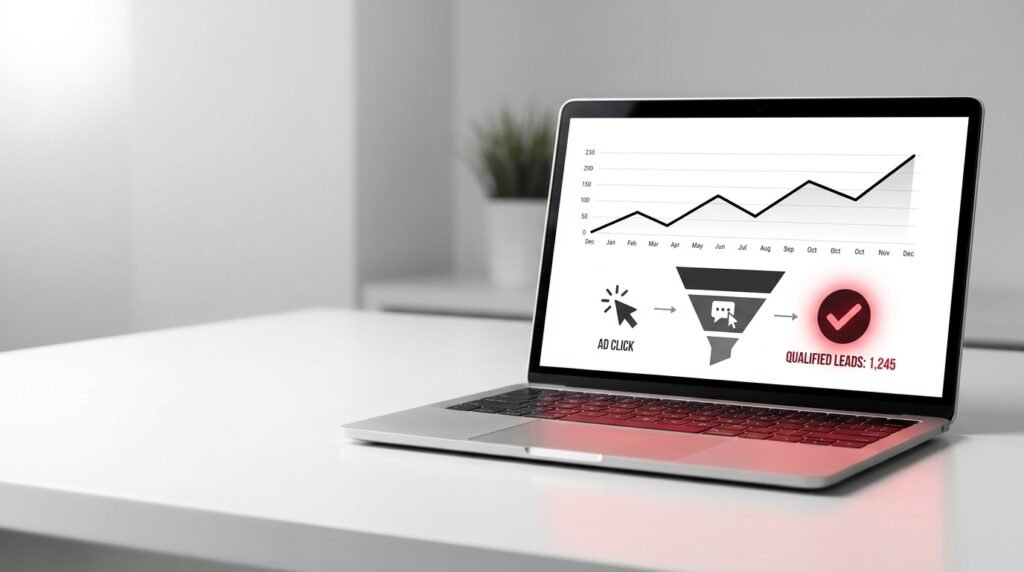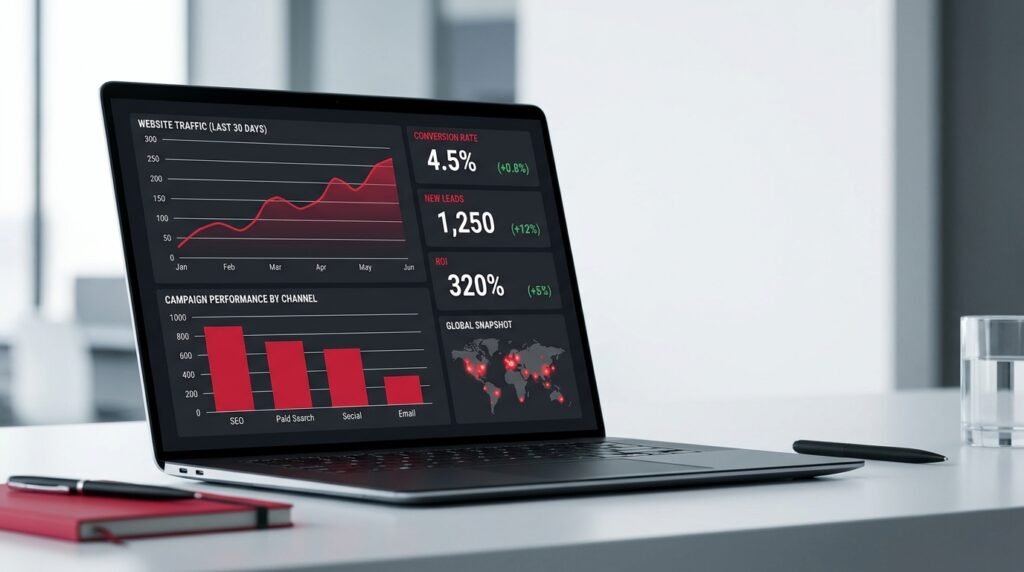


B2B Instagram ads work — but only for specific ICP types and funnel stages. The consistent failure pattern is B2C creative applied to a B2B audience on a platform where buyers are in consumption mode, not purchase mode. When used as a retargeting layer for warm audiences rather than a cold-traffic channel, Instagram regularly outperforms its reputation in B2B campaigns.
Why Instagram gets dismissed for B2B (and why that’s partly fair)
The dismissal has a real basis. A 45-year-old CFO scrolling between brunch photos and a friend’s vacation reel who suddenly sees a corporate product demo ad is a bad experience. The ad is technically targeted correctly. But the context is wrong, and the creative makes it worse. That’s a real failure — just not the platform’s fault.
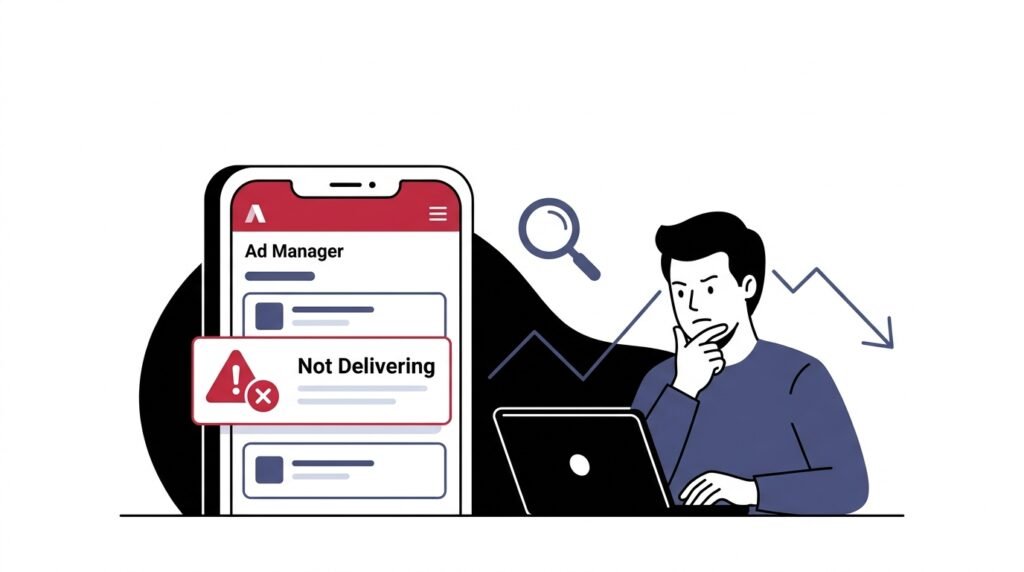
The actual problem most B2B teams run into is treating Instagram like a LinkedIn clone with shorter copy. They take the same ad that ran on Facebook — generic stock photo, product-first headline, corporate tone — and push it to Instagram placements. The CPL comes back at $350 and the conclusion is “Instagram doesn’t work for B2B.”
That conclusion isn’t wrong about the campaign. It is wrong about the channel.
Instagram users are in consumption mode. They’re relaxed, they’re scrolling, they’re not evaluating vendors. Cold B2B ads fight that mindset directly. A retargeting ad doesn’t need to create context from scratch — the prospect already visited your pricing page, already knows the brand, already has some intent. The visual-first, low-friction format of Instagram now works in your favor rather than against you. This is the mechanism most B2B paid social advertising audits miss when they write Instagram off entirely.
If your campaigns keep landing on why B2B ads fail to deliver as the conclusion, a channel switch is rarely the fix. The creative and the funnel position usually are.
When B2B Instagram ads actually work
The clearest predictor of Instagram ad performance in B2B isn’t the industry — it’s whether your ICP uses Instagram personally.
Decision-makers who scroll Instagram as part of their daily routine are reachable in a way that doesn’t require fighting the platform’s context. They encounter your ad the same way they encounter everything else: visually, casually, without the professional-mode resistance that makes cold LinkedIn InMails feel intrusive.
The ICP types where Instagram consistently earns its budget in B2B:
| ICP type | Why Instagram works |
|---|---|
| Founders and SMB owners | Use Instagram personally; respond to peer-tone, direct content |
| Marketing managers and agency professionals | On the platform daily; actively engage with creative and social proof |
| Designers and creative directors | Visual-first medium matches their professional identity |
| Real estate and hospitality B2B buyers | Visual industry; decision-makers are genuinely Instagram-active |
| B2B SaaS targeting under-35 buyers | Younger decision-makers; platform-native behavior patterns |
Beyond ICP fit, two other situations work reliably. Retargeting existing web visitors and CRM contacts who are Instagram-active gives you warm, intent-confirmed audiences at Meta’s lower CPMs. Brand awareness plays for companies whose buyers skew under 40 also show higher video completion and recall on Instagram than Facebook for the same creative.
The common thread: Instagram rewards prior context. If the viewer knows who you are, the ad does less work. If they don’t, the ad has to do everything — and on Instagram, that’s a difficult brief.
For a breakdown of which formats perform across channels, B2B social media ads covers the full picture.
When B2B Instagram ads don’t work
Three situations where the math consistently doesn’t justify Instagram for B2B.
Enterprise sales targeting C-suite. When the buyer is a VP of Procurement at a 5,000-person company, the professional context of the ad matters. These buyers respond to LinkedIn because it matches where they think about work. Instagram is where they look at their kids’ sports photos. The channel mismatch is real here, and creative optimization won’t fix it.
Highly technical products with IT or infrastructure buyers. If your ICP’s purchasing trigger is a detailed technical specification and their trust signal is peer review or analyst reports, Instagram’s visual-first format can’t carry that weight. The platform wasn’t built for the content that closes these deals.
No warm audience yet. Cold B2B prospecting on Instagram produces CPLs of $200–$400 according to 42Agency’s benchmarks from 87 real B2B campaigns. Without a retargeting pool built from existing web traffic, CRM contacts, or prior campaign engagement, the economics rarely work. The first Instagram campaign for B2B should be a retargeting test, not a cold prospecting push. If it can’t convert warm audiences, cold traffic will perform worse.
The creative problem: what bad B2B Instagram ads look like vs. what works
The difference is usually obvious once you see it side by side. Bad B2B Instagram creative: stock photo of two people shaking hands in a glass office, headline that says “Grow your business with [Product],” copy that reads identically to the Facebook version of the same ad. It’s not the targeting that’s wrong. The ad signals “ad” the moment it appears.
The first frame on Instagram has one job: stop the scroll. Corporate imagery doesn’t do that. It registers as background noise.
Here’s what actually works.
Founder and team content
Real people on camera, speaking directly, without the polish of a produced corporate video. This format works because it matches what surrounds it in the feed. When a founder explains a specific pain point their clients face — not in a scripted testimonial way, but in the way you’d explain it across a table — the viewer’s brain processes it differently than an ad. A face builds trust faster than a logo.
Problem-visualization creative
Show the situation before naming the solution. A visual that depicts the specific frustration your ICP lives with — the bloated reporting dashboard, the three-step approval process that killed a campaign, the spreadsheet that somehow became the CRM. Recognition precedes attention. The viewer thinks “that’s me” before they’ve decided whether to care about your product.
This is the visual equivalent of a problem-first copywriting framework — lead with the pain, let the solution follow naturally.
Social proof carousels
Real numbers, real client categories, specific results. “We helped 12 SMB marketing teams reduce CPL by an average of 38% in 90 days” outperforms “We deliver results” by a margin that isn’t close. Specificity kills skepticism. Vague claims get scrolled past. Specific claims create curiosity.
Carousel format works here because each slide advances the proof incrementally: the client’s situation, what changed, the number, the CTA. Readers who swipe through three slides are genuinely interested.
For the broader paid social strategy these creative approaches fit into, Meta Ads for B2B covers campaign architecture in more depth.
Instagram vs. Facebook for B2B: what the numbers show
This isn’t a question of which platform is better. It’s a question of which one does which job.
| Best for | Retargeting, brand awareness, video completion | Cold lead gen, direct response |
| CPM range (B2B) | $5–$8 Reels/Stories; $8–$14 Feed | $6–$11 Feed |
| CTR range (B2B) | 0.6–1.0% prospecting; higher on retargeting | 0.9–3.06% average |
| Creative format | Visual-first, short copy, vertical | Longer copy, link-click friendly |
| B2B primary use case | Retargeting warm audiences, brand lift | Lead gen, demo requests |
The benchmark data behind this comparison matters more than the table itself. Three independent datasets from 2026 B2B campaigns point to the same ranges:
- B2B Meta retargeting CPL: $50–$150 — consistent across 42Agency (87 real B2B campaigns) and Lever Digital’s B2B Meta benchmarks
- B2B Meta cold prospecting CPL: $200–$400 (42Agency, 2026)
- B2B SaaS retargeting campaigns deliver 40–60% lower cost per qualified lead than cold traffic campaigns (AdAmigo, 2026)
- Retargeted ads on Meta achieve 94% higher CTR than standard display placements (Meta Performance Benchmarks via SQ Magazine, 2026)
The retargeting gap is the argument for Instagram in B2B. The cold-traffic CPL is the argument against using it as a primary lead generation channel.
The practical split: Facebook runs direct response campaigns. Instagram retargets the people Facebook and LinkedIn already reached. Running both platforms with identical creative and identical objectives is the error that produces the “Instagram doesn’t work” conclusion. For a direct comparison of how Meta performs against other paid channels, how Meta compares to other B2B ad channels breaks down the ROI split.
How to set up B2B Instagram ads correctly
Audience targeting
Three layers, in order of expected performance:
CRM Custom Audiences. Upload your existing contact list. These are people who already know your brand — the highest-intent, lowest-CPL audience available. Match rates vary, but even a 40% match on a 2,000-contact list gives you 800 warm prospects at Meta’s CPMs rather than LinkedIn’s.
Meta’s B2B Audience Segments. Available in Ads Manager under Detailed Targeting. The options: Business Decision Makers (key decision-makers across marketing, operations, HR, engineering, and IT identified by job title behavior), IT Decision Makers (narrower, focused on technology titles), and New Active Business (administrators of business pages created within the last 6, 12, or 24 months). These are behavioral segments, not raw job-title targeting. They consistently outperform job-title layers on Meta because the signal is based on actual platform behavior, not self-reported profile data.
Retargeting pools. Website visitors via pixel (segment by recency — a 7-day pool carries higher intent than a 30-day pool), video viewers at 50%+ completion, and Instagram profile engagers from the past 90 days. The recency segmentation matters: someone who visited your pricing page yesterday and someone who read your blog three months ago need different messages and different bids.
Placement decisions: Advantage+ vs. manual
Advantage+ works well when your retargeting pool is large enough to generate meaningful data, when you’re in an early data-gathering phase, or when running brand awareness objectives where placement efficiency matters more than placement specificity.
Manual Instagram-only placements make sense when a breakdown report from a prior Advantage+ campaign shows Instagram outperforming Facebook on the metrics you care about, or when running creative built specifically for vertical Instagram format that doesn’t translate to Facebook’s feed.
The mistake teams make is running Advantage+ for months and then judging Instagram as underperforming without checking the placement-level breakdown report in Ads Manager. Meta often allocates heavily to cheaper placements — Stories and Reels — that drive impressions without driving conversions. Check the placement data before drawing conclusions about the channel.
The retargeting sequence that makes Instagram work for B2B
The sequence below consistently produces better B2B results than running Instagram as a standalone cold channel. For the full campaign architecture behind B2B retargeting ads, the logic here maps directly to how each stage should be structured.
Step 1 — Create the intent signal elsewhere. LinkedIn thought leadership, a Google Search ad, or a content download establishes the first contact. The prospect has now visited your site, engaged with your content, or clicked an ad. You have a pixel event or a CRM record.
Step 2 — Instagram retargets with visual creative. The prospect already knows who you are. The Instagram ad doesn’t need to introduce the brand — it reinforces it. Problem-visualization creative or a social proof carousel works here precisely because the context gap is already closed.
Step 3 — Convert on the channel that closes best. Instagram builds brand recall. It doesn’t always close the deal. Route the final conversion action back to where your audience commits most readily — often a Google Search retargeting ad, a LinkedIn follow-up, or a direct outreach triggered by Meta lead form data.
One scheduling detail worth testing: B2B buyers scroll Instagram during personal time, not work hours. Running awareness and retargeting campaigns in evenings and on weekends consistently improves efficiency on Instagram specifically — the same budget, better-timed.
This three-step structure maps to the full retargeting sequence for B2B and the broader Meta Ads funnel for B2B that covers how to warm cold audiences through each stage.
Our digital advertising services team runs B2B Meta campaigns across both platforms if you want hands-on support building this out.
Frequently asked questions about B2B Instagram ads
Yes, for specific ICP types and funnel stages. Instagram consistently performs for retargeting warm audiences — web visitors, CRM contacts, and content engagers — and for brand awareness with ICPs who use Instagram personally, including founders, marketers, designers, and SMB owners. It underperforms for cold lead generation targeting technical or enterprise buyers.
Facebook outperforms Instagram for cold lead generation and direct response. B2B Meta retargeting CPL benchmarks run $50–$150 on warm audiences; cold prospecting runs $200–$400. Instagram outperforms for video completion rates and brand recall. The most effective setup uses both: Facebook handles direct response, Instagram handles brand memory, with placement-specific creative for each.
Through Meta Ads Manager, use three layers: CRM Custom Audiences (existing contacts), Meta’s B2B Audience Segments (Business Decision Makers, IT Decision Makers, New Active Businesses), and pixel-based retargeting pools segmented by recency. Job-title targeting exists on Meta but is less reliable than LinkedIn — the behavioral B2B segments consistently outperform raw job-title layers.
Three approaches consistently outperform generic corporate creative: founder or team content (real people, direct tone), problem-visualization creative (depicting the buyer’s pain before naming the solution), and social proof carousels with specific client numbers. In all three cases, the first frame must stop the scroll. Corporate imagery does not do this on Instagram.
CPL varies by funnel stage. B2B Meta retargeting campaigns run $50–$150 CPL. Cold prospecting runs $200–$400. B2B SaaS raw lead CPL on Meta averages $63.40, rising to $150–$250 for MQLs and SQLs (42Agency/AdAmigo, 2026). Starting with retargeting before cold prospecting consistently produces better ROI on Instagram.
Should B2B companies use Instagram or LinkedIn for paid ads?
LinkedIn for cold prospecting and job-title targeting. Instagram for retargeting LinkedIn-warmed audiences and maintaining visibility through the consideration phase. Meta’s CPM is 3–5x lower than LinkedIn ($8–$15 vs. $40–$60), making Instagram efficient for staying in front of prospects already in your funnel. For context on how both platforms compare in the Indonesian B2B market, LinkedIn Ads for B2B in Indonesia covers local benchmarks and audience behavior. Use both in sequence, not as alternatives.
B2B Instagram ads work for some ICPs and not others. Tell us about your target audience and we’ll tell you honestly whether it’s worth testing. Book a free consultation — no pitch, just a straight answer.